22 October 2026
Digital security, technological sovereignty and competitiveness in focus at Techritory
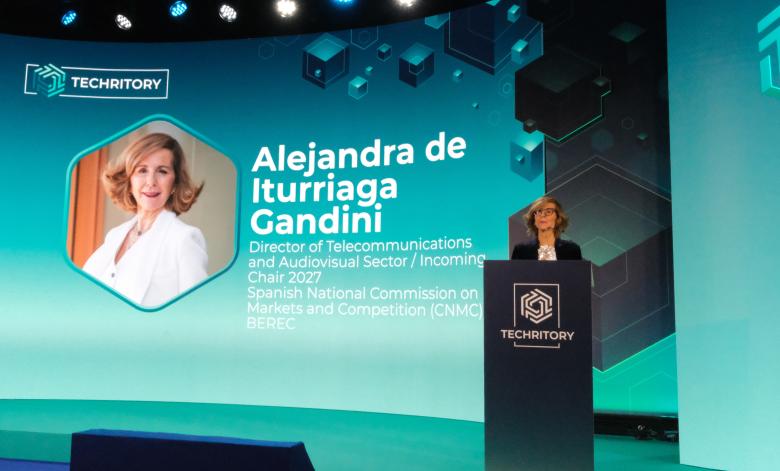
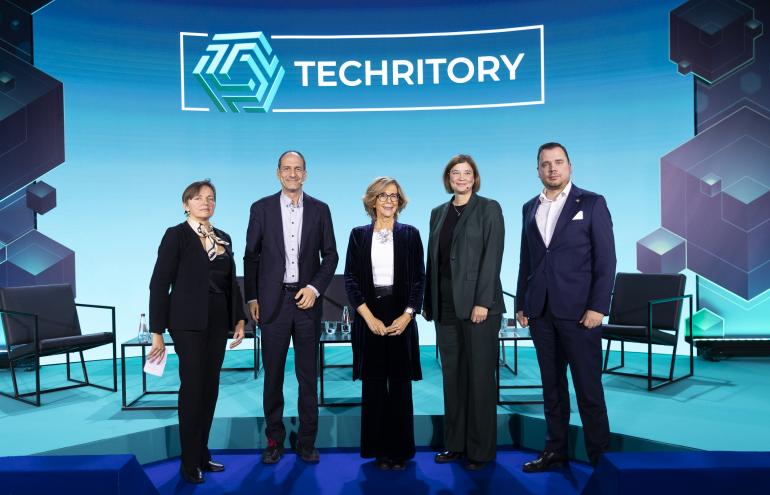
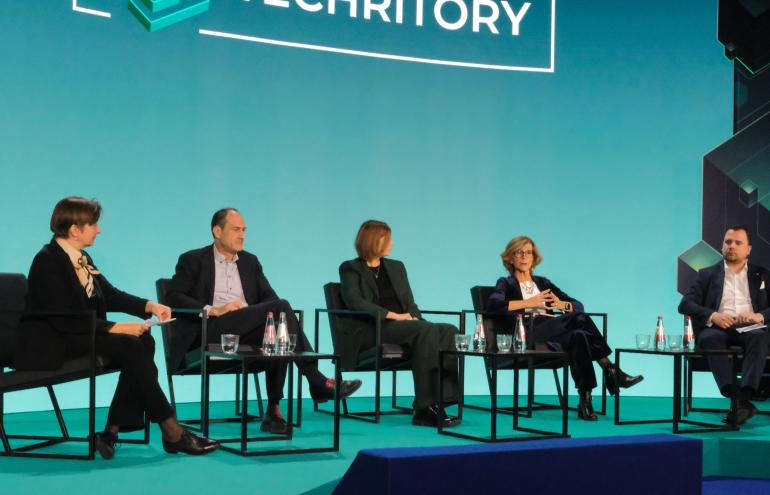
At this year’s Techritory — a leading European forum on digital transformation, connectivity and technology policy — BEREC contributed to high-level discussions on digital security, technological sovereignty and global competitiveness. Incoming BEREC Chair Alejandra de Iturriaga (CNMC, Spain) delivered a keynote speech and joined the panel discussion “Deep-diving the Digital Networks Act”. BEREC Office Director Verena Weber also moderated a panel discussion on economic development through digitalisation and connectivity.
BEREC’s keynote: market developments and the DNA
In her keynote speech, the incoming BEREC Chair referred to BEREC’s recently adopted report on connectivity, competition and regulatory highlights across different jurisdictions, which points to strong competitive dynamics, affordable prices and improving coverage in the EU telecommunications sector. She also highlighted progress in narrowing the urban–rural broadband gap and the important role challengers have played as investors in many markets. These developments show that competition and appropriate regulatory oversight have delivered positive results for end-users in Europe.
Alejandra de Iturriaga then turned to the Digital Networks Act (DNA), stressing that any review of the telecom rules should build on what has already worked well. In this context, the incoming BEREC Chair welcomed the fact that the proposal is designed as an evolution rather than a revolution. In other words, it seeks to update the current rules without abandoning the main principles and methods that have proved effective.
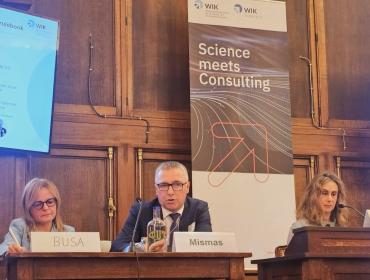
Deep-diving the Digital Networks Act
During the panel discussion dedicated to the DNA, participants examined the main questions raised by the proposal, including its objectives, its most ambitious changes compared with the current framework, and its implications for competition, investment, the single market, spectrum policy, regulatory fragmentation and end-user protection.
The incoming BEREC Chair noted that the DNA sets out ambitious and wide-ranging goals, including simplification, stronger European competitiveness, a more integrated internal market, and greater security and resilience. She said BEREC sees the general direction of the proposal, and many of its specific elements, as positive. Alejandra de Iturriaga pointed in particular to the proposal’s recognition of ex ante, data-driven regulation based on technical analysis, as well as its support for the current BEREC structure, which brings together the expertise of national regulatory authorities across Europe. At the same time, she said some parts of the proposal still need to be clarified or improved. In particular, this concerns who should be responsible for what at EU and national level, how the new system would be organised and managed, and how far the rules should be made the same across all Member States.

Connectivity and economic development
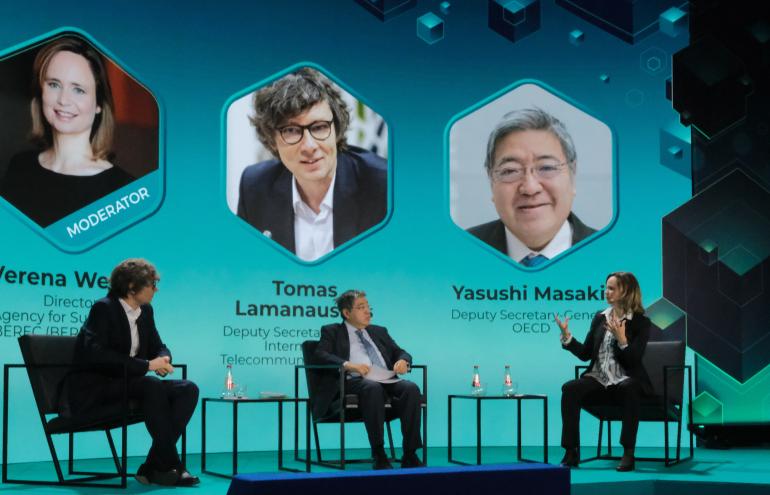
BEREC Office Director Verena Weber moderated the opening panel discussion, “Economic development through digitalisation and connectivity”, which brought together ITU Deputy Secretary-General Tomas Lamanauskas and OECD Deputy Secretary-General Yasushi Masaki to exchange on their policy priorities that will shape competitiveness and prosperity in the years ahead.
The discussion highlighted the growing recognition that connectivity is not only a foundation of modern economies, but has also become a critical infrastructure. The panel further addressed the need to close national and subnational connectivity gaps and to address the current concentration of AI compute or leading-edge semiconductor production in only a few countries. The discussion closed with addressing mounting geopolitical pressures on digital infrastructure and the need for stronger international cooperation to enhance resilience and safeguard the connectivity on which both security and prosperity depend. Panelists stressed that risks should be managed without undermining openness and that de-risking should not fragment digital ecosystems.