14 October 2026
Digital Networks Act debate highlights role of competition
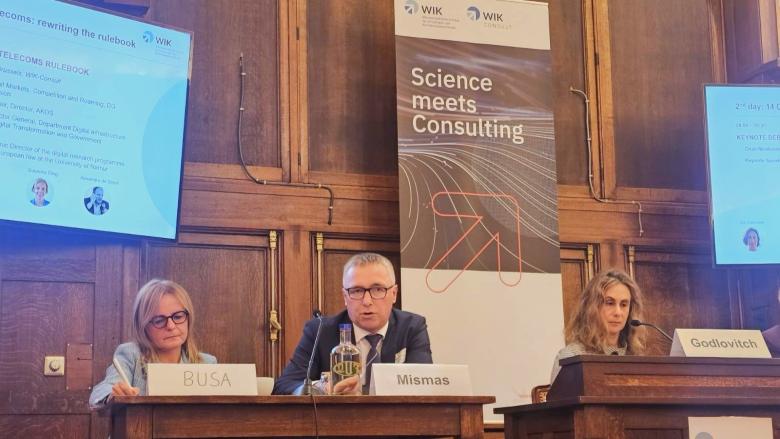
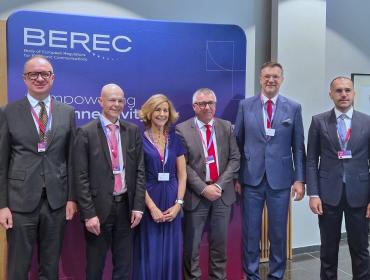
On 14 October, BEREC Chair Marko Mismas (AKOS, Slovenia) and incoming BEREC Chair Alejandra de Iturriaga (CNMC, Spain) took part in the annual WIK conference in Germany, contributing to high-level discussions on the future of electronic communications in Europe.
The conference brought together representatives from the European Commission, the European Parliament, the Council, BEREC, industry and academia to exchange views on the forthcoming Digital Networks Act and the future direction of Europe’s telecoms policy.
Debating the future Digital Networks Act
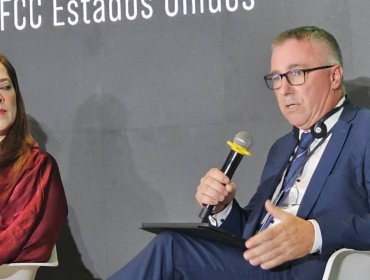
Marko Mismas participated in the keynote session, where speakers addressed issues linked to the proposed new regulatory framework, including the transition to fibre networks, the principle of technological neutrality, copper switch-off, access regulation in a fibre environment, mobile policy objectives, spectrum policy, satellite authorisation and the future governance of telecoms markets in the EU.
In his intervention, the BEREC Chair welcomed the forthcoming Digital Networks Act's strong focus on strengthening Europe’s competitiveness, while underlining that competition remains one of the main achievements of European telecoms regulation and should remain a stand-alone objective in the future framework.
He stressed that competition has helped reduce prices, improve service quality, encourage innovation and support investment across the sector. Referring to the recent BEREC’s analysis of European telecoms markets, he noted that market performance in Europe is considerably stronger than is sometimes portrayed.
He also highlighted that competition should not be seen only as a tool for achieving competitiveness, but as an objective in its own right, given its role in driving innovation, efficiency, investment and consumer welfare. On investment, he underlined that the focus should be on ensuring that investment delivers concrete benefits in terms of better connectivity, broader coverage, higher quality and improved services for citizens and businesses. In this context, BEREC has also argued for maintaining the concept of efficient investment among the regulatory objectives.
Sharing practical experience on full fibre and copper switch-off
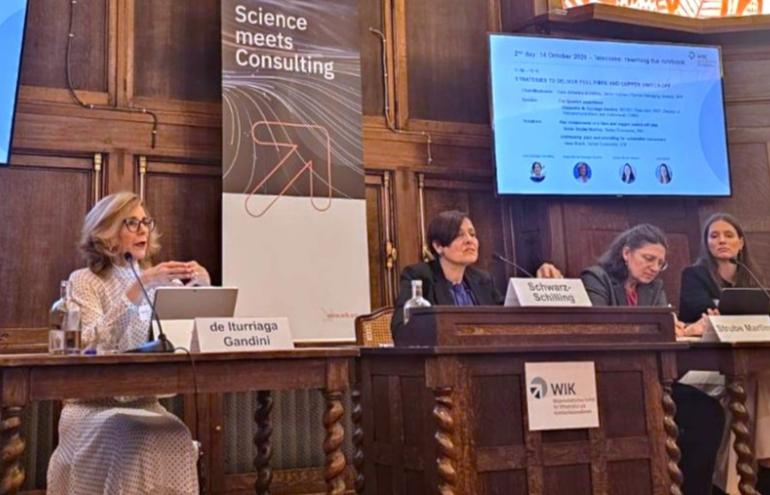
Incoming BEREC Chair Alejandra de Iturriaga took part in the session on Strategies to deliver full fibre and copper switch-off, which focused on practical approaches that have proved successful in expanding full fibre coverage while promoting sustainable competition and delivering benefits for end-users. During the discussion, Alejandra de Iturriaga shared Spain’s experience in advancing fibre deployment and copper switch-off, offering practical insights from one of Europe’s most advanced markets in this area. Spain is now the second country in the EU for fibre coverage, after Romania, and in 2024 ranked third in the OECD for the share of fibre connections in fixed broadband, behind only Iceland and Korea. According to Alejandra de Iturriaga, several factors drove this progress, including early and extensive fibre deployment, the availability of wholesale agreements that derived in intense competition in fiber based services, public aid in rural areas, forward-looking regulation, and end-user migration supported by transparency measures.