18 May 2026
BEREC Chair highlights importance of regional cooperation on digital regulation at Global Symposium for Regulators
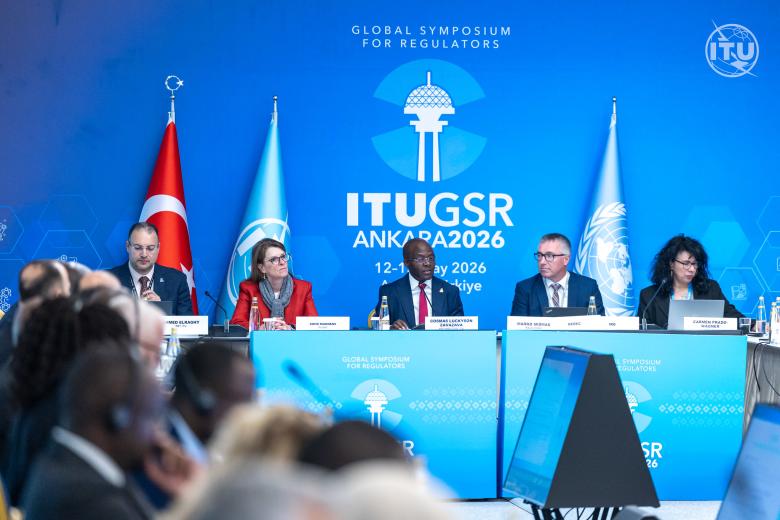
Regional cooperation is essential for developing effective and future-proof digital regulation. Speaking at the opening of the ITU Global Symposium for Regulators (GSR) in Ankara, Türkiye, the BEREC Chair Marko Mismas (AKOS, Slovenia) highlighted the growing need for regulatory dialogue across jurisdictions, reflecting the global nature of digital services and the convergence of technologies and business models.
His remarks set the tone for discussions held under this year’s theme, Navigating the Digital Frontier. Over several days, regulators from around the world exchanged views on approaches aimed at fostering a resilient, secure and inclusive digital future in an increasingly interconnected environment.
Balancing investment, competition and consumer protection
During the event, the BEREC Chair also highlighted the important role of regulation in supporting the transition to full-fibre connectivity. As Europe enters a crucial phase for connectivity, he stressed that the future regulatory framework should be simplified and balanced to encourage large-scale investment, ensure sustainable competition and effective market outcomes, while continuing to protect and empower end-users and broader societal interests.
He added that predictable and proportionate regulation will also be essential to supporting long-term investment and adapting effectively to evolving market and technological developments.
Technology and resilience
Milan Radulovic (EKIP, Montenegro), member of the BEREC mini-board and representative of countries without voting rights, shared insights during a panel session on disaster management and resilient early warning systems. He underlined the importance of cooperation among national authorities, industry stakeholders, Europol, ENISA, the NIS Cooperation Group, and the European Commission to strengthen the resilience and security of electronic communications networks across Europe.
The discussion focused on the role of regulation, emerging technologies, and multistakeholder cooperation in improving preparedness and crisis response. Particular attention was given to the potential of artificial intelligence and satellite direct-to-device services to maintain network continuity during emergencies and enhance the effectiveness of early warning and emergency communication systems.
Photo credit: ITU Pictures