07 September 2026
Agility – key principle for modern regulation

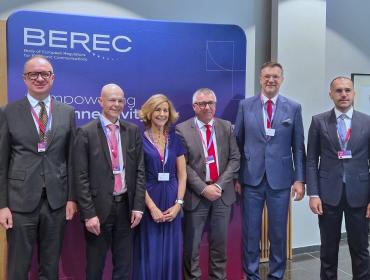
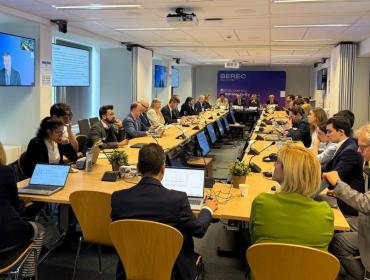
During a visit to Colombia from 31 August to 4 September 2026, BEREC Chair Marko Mismas (AKOS, Slovenia) shared his vision on the future of communications regulation at the ANDICOM Congress and at the 21st International Workshop on Regulation.
A changing digital environment
At the ANDICOM Congress, one of Latin America’s leading ICT and digital transformation events, in the panel Towards Modern and Timely Regulation, the BEREC Chair noted that regulators need to understand the wider digital ecosystem and strengthen cooperation across sectors and institutions. He stressed that agility is a key principle for modern regulation. In BEREC’s view, regulation should be evidence-based, proportionate and flexible enough to adapt to technological and market developments.
BEREC has also highlighted this approach in its recent assessment of the European Commission’s proposed Digital Networks Act.
Learning from the European experience
Marko Mismas underlined that the European model should not simply be replicated elsewhere, as markets, geography, income levels and institutional structures differ. At the same time, he pointed to several lessons from the European experience that may be relevant beyond Europe.
He highlighted that effective competition remains a key driver of investment and innovation. He also stressed that connectivity should be seen as an enabler of wider economic and social participation, with affordability, quality, inclusion and take-up being just as important as coverage. In addition, he pointed to the growing importance of understanding the wider digital ecosystem, as communications networks are increasingly linked with cloud, edge computing and other digital services. Finally, the BEREC Chair emphasised that trust is essential, with secure and affordable services, meaningful choice and strong end-user protection supporting the development of sustainable digital markets.
In this context, BEREC plans to publish in October a comparative analysis examining where the European Union stands in terms of connectivity, network quality, performance and pricing compared with other jurisdictions. The analysis will provide an overview of the main features of the competitive landscape in Europe’s telecommunications markets. For its analysis, BEREC has collected, analysed and compared data from several countries, taking into account data availability, the reliability of sources and variations between markets. The geographical scope of the analysis covers the EU, the United States, Canada, Australia, China, South Korea, Japan and the United Kingdom.
Strengthening cooperation and resilience
At the 21st International Workshop on Regulation organised by the Comisión de Regulación de Comunicaciones (CRC), Marko Mismas highlighted the value of common evidence, comparable data, peer learning and practical cooperation between regulators. He noted that networks such as BEREC and Regulatel, the Latin American Forum of Telecommunications Regulators, can make a real difference. The BEREC Chair also underlined that harmonisation needs to be considered at different levels, as interoperability and technical standards are essential globally. Common rules can help reduce fragmentation at the regional level, and national regulators still need enough flexibility to respond to specific market conditions.
In a separate panel on data and cloud governance, BEREC Cybersecurity and Resilience Working Group Co-Chair Katja Kmet-Vrčko highlighted the importance of regional cooperation for digital infrastructure. She also pointed to cloud market concentration, interoperability barriers and operational dependencies as important resilience concerns.