05 March 2026
'Smart simplification' in the EU telecom policy

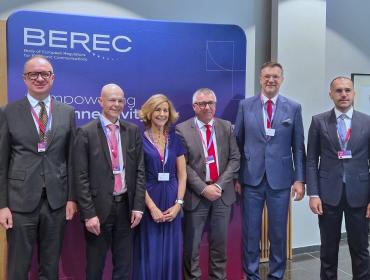
During his recent participation at the Mobile World Congress in Barcelona, the BEREC Chair Marko Mišmaš (AKOS, Slovenia) reaffirmed BEREC's commitment to playing an active and constructive role in the ongoing legislative process. Grounded in its engagement with both users and market players, BEREC brings to the table direct insight into market dynamics, and the ability to translate technical and economic realities into independent, evidence-based expertise to inform dialogue with European institutions, stakeholders, and industry alike.
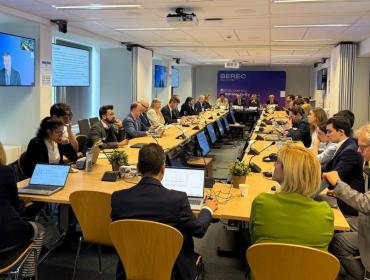
Speaking at the GSMA-BEREC roundtable, Marko Mišmaš acknowledged the significant progress that Europe has made under the current regulatory framework — the European Electronic Communications Code — while making clear that regulatory progress on its own is not enough. Issues remain such as fibre take-up (which is still uneven), standalone 5G deployment and usage lag behind other leading economies, and investment incentives continue to differ across the Member States.
In his introductory remarks, the BEREC Chair addressed several issues central to the debate on the future framework. These included the preservation of the open internet, the growing role of satellite and non-terrestrial networks, and the importance of regulatory independence. He underscored the fact that strong, impartial governance remains a cornerstone of any effective telecommunications framework.
The BEREC Chair reminded participants that Europe has already proven that competition and investment can go hand in hand. Ex-ante regulation has already opened up formerly monopolistic markets, driven investment, and delivered wide network coverage at relatively affordable prices. The task now is to create the environment that will encourage investments and innovation. This could be done by smart simplification, meaning reducing unnecessary complexity while preserving effective competition, consumer protection, regulatory predictability, and technological neutrality.
On the governance side, BEREC has helped embed greater consistency across Europe, but new challenges have emerged such as resilience, security, and satellite authorisations. All will require better coordination. The BEREC Chair cautioned that any upcoming reforms must protect what has been built and is in place, namely the independence of national regulators, the expertise at national level, and a collaborative European model that works.
The BEREC Chair explained that the goal is to make the system more resilient, not to replace it. In this way, the Digital Networks Act is an opportunity to modernise, and not to destabilise. The road ahead is defined by the following guiding principles: evidence before intervention, proportionality, legal certainty, consumer protection, and the preservation of competition.